


What do you do when you feel powerless inside a system?
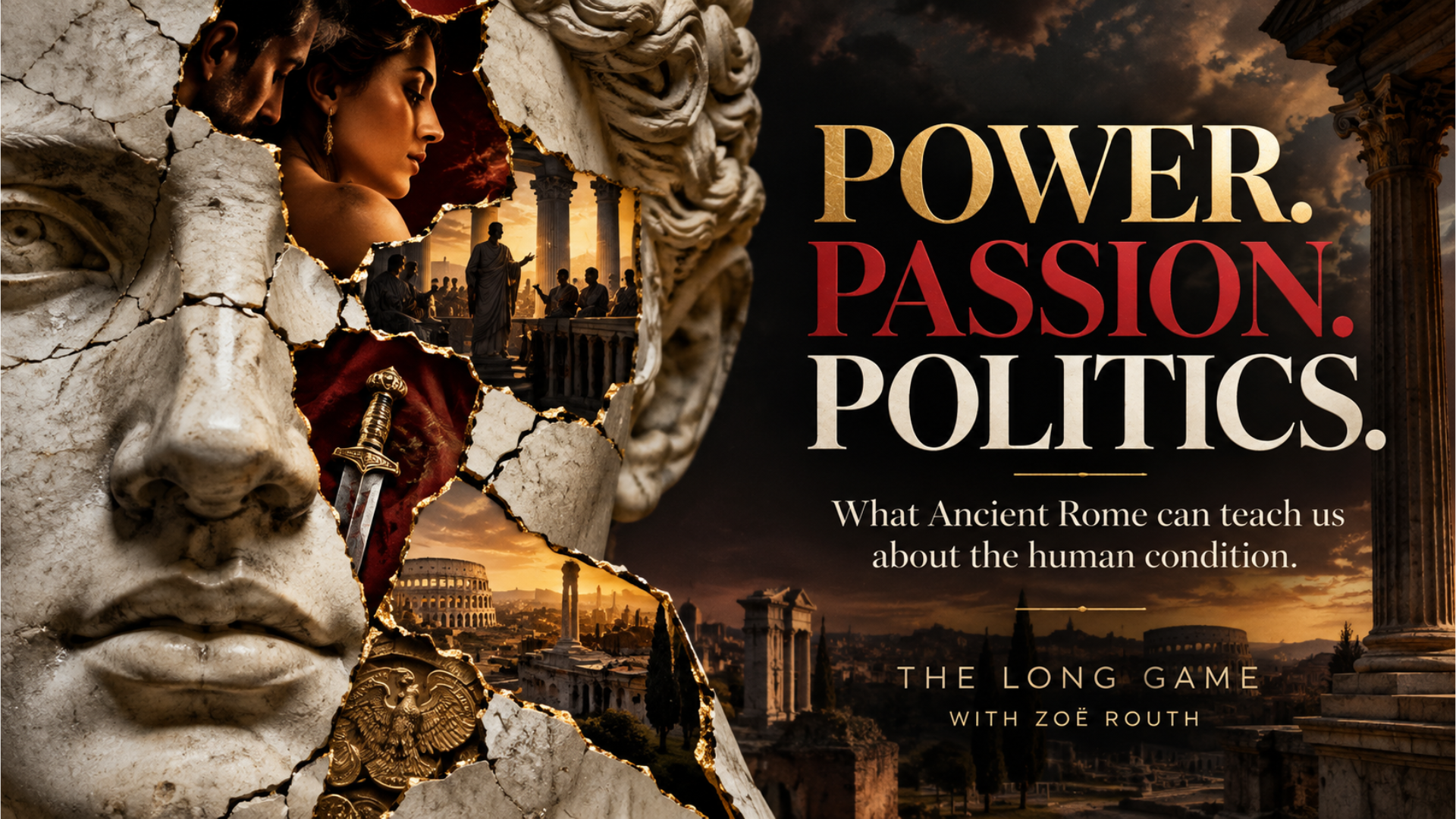
In this episode of The Future of Leadership, Zoë Routh launches a new season, Passion, Power, Politics: What Ancient Rome Can Show Us About the Human Condition, exploring how power operates inside political systems, organisations, families, and communities.
Drawing on Ancient Rome and the transition from Republic to Empire, Zoë introduces three lenses for understanding power: the Great Man, the Hidden Hands, and the Buried Code.
Through the story of Julius Caesar, Mark Antony, Augustus, and Rome’s deeply embedded resistance to kingship, Zoë explores why power is rarely held by one person alone. Charisma and authority matter, but so do the people who enable leaders, the systems that reinforce their influence, and the beliefs and values sitting underneath those systems.
She also examines what this means for modern organisations. When leaders are not the person “wearing the crown”, where does their influence come from? And when a system begins to derail, what role can quiet resistance, organisational policies, whistleblower protections, and individual agency play?
The central leadership challenge is not simply identifying who has power. It is understanding what allows that power to exist, what reinforces it, and what might need to change beneath the surface.
Summary
Zoë shares personal updates:
Power Inside Systems - Power is personal, but our ability to exercise it is shaped and constrained by the systems around us.
The Great Man Theory - Exploring how charisma, influence, wealth, status, and authority can concentrate power around highly visible leaders.
The Hidden Hands - Understanding the people behind the figurehead who enable, support, resist, or influence what happens.
The Buried Code - Looking beneath visible leadership to the values, beliefs, assumptions, and cultural stories that hold systems in place.
Ancient Rome and the Republic - What Caesar, Augustus, and Rome’s transition from Republic to Empire reveal about how power changes over time.
Thought-Provoking Questions for Leaders, focusing on:
Who actually holds power inside my organisation?
What systems enable or constrain the way power is exercised?
Who are the hidden hands influencing decisions behind the scenes?
What beliefs, assumptions, or values form the buried code of our organisation?
Do our policies protect people who challenge the status quo?
What happens when too much authority becomes concentrated around one leader?
If I do not hold formal authority, where can I still exercise meaningful influence?
Zoë Routh reflects on:
Systems Are Built to Contain Power - Why political and organisational systems often emerge to prevent authority becoming concentrated in one person.
Power Beyond the Figurehead - Why understanding leadership requires looking beyond the most visible person in the room.
Hidden Hands and Influence - How loyalty, relationships, incentives, fear, and personal interests can reinforce a leader’s power.
The Buried Code - Why deeply held cultural beliefs can be more powerful than formal rules or structures.
Quiet Resistance - How small acts of influence and resistance can challenge systems from within.
The Risks of Speaking Up - Why challenging powerful people or dysfunctional systems can carry genuine personal and professional consequences.
Key Quotes
“Power also exists within a system, and how we can and cannot exercise our power is often constrained and bound by the system or systems in which we find ourselves.” - Zoë Routh
“The buried code is the set of values and principles that are kind of invisible until we surface them.” - Zoë Routh
“When you start to buy your own BS, you become quite vulnerable. The people around you tend to prop you up because you don’t want to hear bad news.” - Zoë Routh
“As soon as you’re loyal to one man instead of the notion of Rome, things start to fall apart.” - Zoë Routh
“As soon as you give too much power to the great man, great woman, things can start to get derailed because you lose your moral compass.” - Zoë Routh
Questions Explored
What can you do when you feel powerless inside a system?
How does power operate beyond the person formally in charge?
What can Ancient Rome teach modern leaders about influence and authority?
Why do people support and enable powerful leaders?
What is the buried code inside an organisation?
How can leaders identify policies and practices that support or suppress people?
What role does quiet resistance play when a system starts to derail?
What risks should leaders consider before challenging people in power?
Take Action
Identify who holds both formal and informal power in your organisation.
Look beyond job titles and map the people who influence key decisions.
Examine the beliefs and assumptions that underpin your organisation’s culture.
Review how disputes, challenges, and whistleblower concerns are handled in practice.
Notice whether policies support people speaking up or make it harder for them to do so.
Consider where you have influence even when you do not hold formal authority.
Ask what small changes to systems, policies, or conversations could create a healthier balance of power.
Be realistic about the personal risks involved when challenging entrenched systems.
Go Deeper:
Explore Zoë’s books: https://zoerouthauthor.com
Enter the Power Games giveaway here
Learn more about Power Games: https://zoerouthauthor.com/products/power-games-paperback
Key Moments
00:00 Welcome to the show
00:38 Passion, Power, Politics & the season’s big question
01:04 Planet Zoë: life, travel & personal updates
03:07 Book updates & The Pearl and the Dagger
05:55 Power inside systems
08:23 Three theories of power
11:45 Lupercalia: Mark Antony offers Caesar the crown
15:01 Caesar through the three lenses of power
19:21 The Buried Code & the rise of Augustus
24:50 How small system changes reshape power
26:34 What leaders can examine inside organisations
27:42 Hidden Hands, quiet resistance & the risks of speaking up
29:23 Power Games giveaway & what’s coming next
Related episodes on Power, Passion and Politics
389 Navigating Power: Balancing Influence and Integrity with Sylvia Rohde-Liebenau

About Zoë Routh
Zoë Routh is a leadership futurist, podcaster, and multiple award-winning author. She works with leaders and teams to navigate future horizons.
She has worked with individuals and teams internationally and in Australia since 1987. From wild Canadian rivers to the Australian Outback, and the Boardroom jungles, Zoë is an adventurist! She facilitates strategy and culture sessions with audacious teams.
Zoë's fourth leadership book, People Stuff - Beyond Personality Problems: An advanced handbook for leadership, won the Book of the Year at the Australian Business Book Awards in 2020. Her fifth book is a near future science fiction dystopian novel, The Olympus Project.
Zoë is the producer of the The Future of Leadership Podcast dedicated to asking “What if…?” and sharing Big Ideas on the Future of Leadership.
Zoë is an outdoor adventurist and enjoys telemark skiing, has run six marathons, is a one-time belly-dancer, has survived cancer, and loves hiking in the high country. She is married to a gorgeous Aussie and is a self-confessed dark chocolate addict.