


Historical fiction author and former journalist Alistair Forrest joins Zoë Routh to explore how political ambition, propaganda, and strategic alliances shaped leadership during the fall of the Roman Republic and the rise of the Roman Empire.
Ancient Rome was a world where power depended on military strength, public reputation, political relationships, and the ability to control the narrative. Leaders such as Julius Caesar and Augustus understood how to influence public opinion, build alliances, and position themselves for power, often with significant consequences for ordinary people.
How can we distinguish good leaders from bad leaders when history is often written by the victors? Does political success indicate effective leadership, or should leaders be judged by their values, intentions, and the consequences of their decisions?
Drawing on his historical research and novels, including Libertas, Vipers of Rome, and his Caesar trilogy, Alistair examines Caesar's military campaigns, Augustus's rise to power, the strategic importance of Agrippa and Maecenas, and the complicated legacy of Sextus Pompey.
Together, Zoë and Alistair uncover valuable lessons for modern leaders about political influence, managing reputation, building strategic relationships, communicating with integrity, and understanding the human consequences of power.
Summary
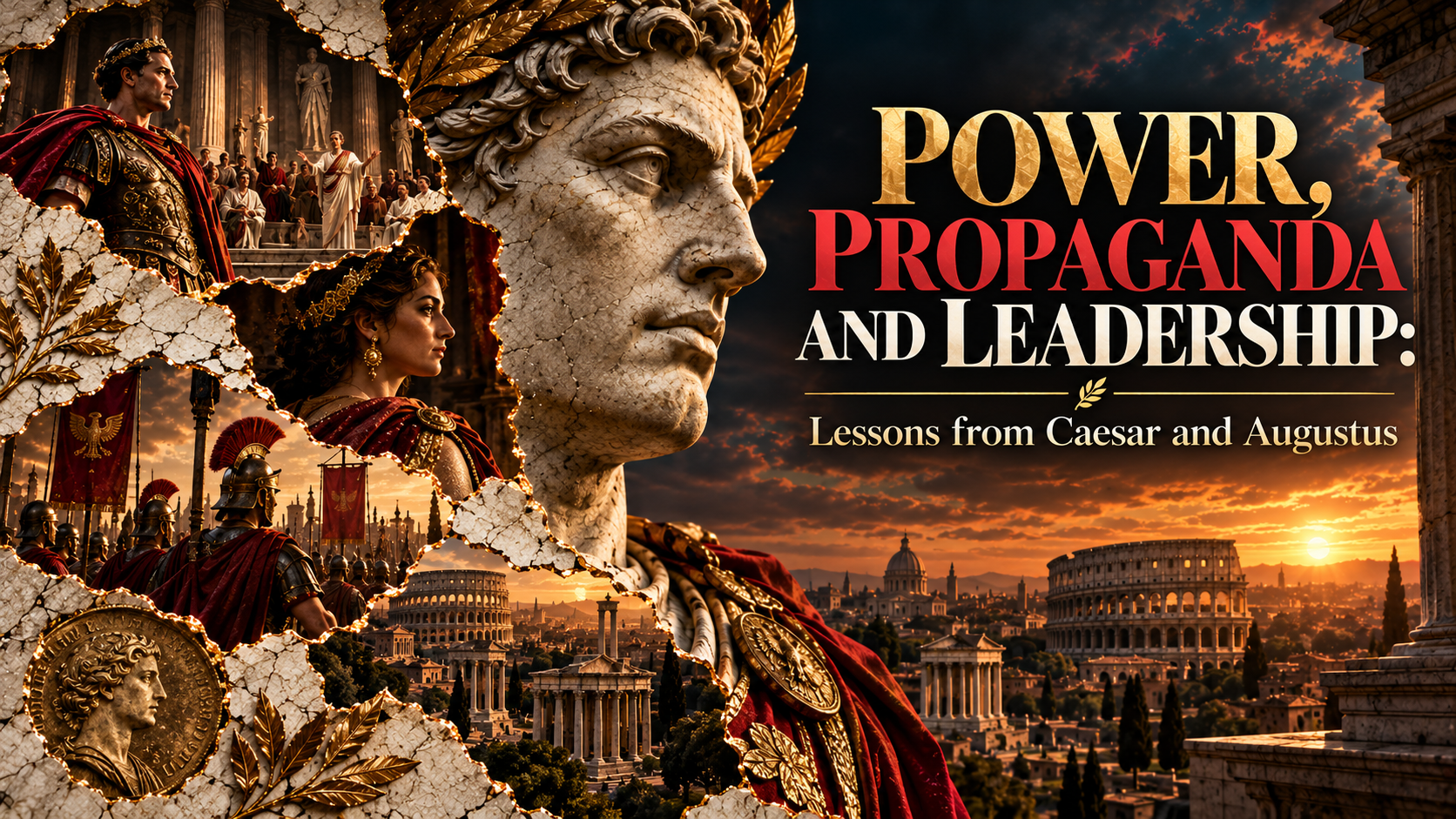
Power, Propaganda and Leadership in Ancient Rome - How Julius Caesar and Augustus used military ambition, political influence, public reputation, and strategic communication to establish and maintain power.
Caesar's Military Campaigns and Their Human Consequences - How Caesar's conquest of Gaul, invasions of Britain, and civil wars affected ordinary communities, challenging traditional narratives of military glory.
Augustus's Rise to Power and Strategic Alliances - How Octavian leveraged Caesar's legacy, public support, and trusted partnerships with Agrippa and Maecenas to navigate political uncertainty and consolidate authority.
Intelligence Networks and Controlling the Narrative - How propaganda, coded messages, information networks, and public communication influenced political loyalty and perceptions of leadership.
Good Leaders, Bad Leaders and the Ethics of Power - What the contrasting reputations of Caesar, Augustus, and Sextus Pompey reveal about judging leadership through values, intentions, actions, and consequences rather than political success alone.
Thought-Provoking Questions for Leaders, focusing on:
How do I distinguish effective leadership from political success, and am I questioning the narratives that shape my perception of those in power?
Am I considering how my decisions affect employees, communities, and people who have little influence over the outcomes?
How effectively am I building relationships with trusted individuals whose strengths, expertise, and perspectives complement my own?
Am I communicating with integrity, or am I allowing reputation management and organisational politics to overshadow transparency and accountability?
Are my leadership decisions aligned with my values and intentions, and do they contribute to the broader good rather than serving narrow personal interests?
Alistair Forrest reflects on:
Historical Fiction and the Human Cost of Power - How his research into Caesar's campaigns inspired stories told through the experiences of ordinary people affected by warfare, political ambition, and decisions made by powerful leaders.
Julius Caesar's Ambition and Military Leadership - How financial motivations, territorial expansion, and the pursuit of political influence shaped Caesar's campaigns in Gaul and Britain.
Augustus's Political Intelligence and Strategic Partnerships - How Octavian benefited from Caesar's reputation, Agrippa's military and engineering expertise, and Maecenas's political connections to establish his leadership.
Propaganda, Intelligence and Political Influence - How Caesar's written accounts, coded communications, information networks, and carefully managed narratives influenced public opinion and political allegiances.
Sextus Pompey and the Complexity of Leadership Reputation - How historical perspectives can transform individuals into heroes or villains, revealing the importance of examining motives, circumstances, and consequences before judging leadership.
Key Quotes
“I didn't want it to be about warfare. I wanted it to be about the results of warfare and the results of political decisions taken far away.” - Alistair Forrest
“What he really wanted was slaves to sell for cash.” - Alistair Forrest, on Julius Caesar's motivations
“One person's tyrant is another person's hero.” - Zoë Routh
“If you control the narrative, you control the outcome.” - Zoë Routh
“What are your intentions and what do your actions say about delivering on those intentions?” - Zoë Routh
Questions Explored
How can we distinguish good leaders from bad leaders when historical reputations are shaped by propaganda, political success, and the perspectives of those who hold power?
What can Julius Caesar's military campaigns teach us about ambition, political influence, storytelling, and the human consequences of leadership decisions?
How did Augustus leverage Caesar's legacy, public support, and strategic partnerships with Agrippa and Maecenas to rise to power?
How did intelligence networks, coded communications, propaganda, and control of the narrative influence political loyalty and power struggles in Ancient Rome?
What can modern leaders learn from Caesar, Augustus, and Sextus Pompey about ethical leadership, managing reputation, building alliances, and using power responsibly?
Take Action
Question the Leadership Narrative - Look beyond reputation and political success to examine whose perspectives are represented, what information may be missing, and how perceptions of leadership are shaped.
Consider the Human Impact of Decisions - Learn from Caesar's military campaigns by evaluating how your choices affect employees, communities, and those with limited influence over the outcome.
Build Strategic Relationships - Take inspiration from Augustus's partnerships with Agrippa and Maecenas by surrounding yourself with trusted individuals whose expertise and capabilities complement your own.
Communicate with Integrity - Recognise the influence of storytelling and public perception while ensuring your communication reflects transparency, accountability, and genuine leadership values.
Evaluate Leadership Through Values and Actions - Look beyond titles, popularity, and achievements to assess intentions, behaviours, and whether decisions contribute to the broader good.
Go Deeper:
Explore Zoë’s books: https://zoerouthauthor.com
Enter the Power Games giveaway here
Learn more about Power Games: https://zoerouthauthor.com/products/power-games-paperback
Key Moments
00:00 Welcome to the Show and the Big Leadership Question: Good Guys or Bad Guys?
00:45 Planet Zoë: Western Australia Leadership Program and Updates
01:30 Power Games Signed Paperback Giveaway
03:00 Ancient Rome Novel Progress and Editing Update
03:41 Meet Alistair Forrest: Historical Fiction, Journalism and Ancient Rome
05:22 How Alistair Discovered Historical Fiction and His Fascination with Rome
07:38 The Battle of Munda: Caesar's Final Battle and the Inspiration for Alistair's First Novel
09:40 Telling Rome's History Through the Eyes of Ordinary People
12:24 The Human Consequences of War and Political Decisions
14:40 Rebuilding After Devastation: Hope, Freedom and Survival
17:28 Caesar's Invasions of Britain and Alistair's Historical Fiction Trilogy
21:54 Caesar's Motivations: Wealth, Greed and Political Ambition
23:10 The British Campaigns: Military Strategy, Resistance and Miscalculations
25:05 Caesar's Propaganda and the Construction of a Political Reputation
26:59 Octavian's Rise to Power: What Did He Understand About Leadership?
28:30 Augustus's Three Advantages: Caesar's Name, Agrippa and Maecenas
30:15 Winning Over the People: Popular Support and Political Legitimacy
32:57 Agrippa, Intelligence Networks and the Power of Information
33:58 Roman Letters, Caesar's Cipher and Military Communication
36:21 Propaganda, Political Allegiances and Controlling the Narrative
38:16 Good Guys or Bad Guys? How History Shapes Leadership Reputations
39:41 Sextus Pompey: A Villain, a Victim or a Leader Fighting for His Cause?
41:40 Controlling Rome's Grain Supply and the Conflict with Octavian
43:36 Agrippa's Naval Strategy and the Defeat of Sextus Pompey
44:45 Why Political Success Does Not Always Mean Good Leadership
46:16 Fast Three: Sacred Chickens, Aulus Hirtius and Roman Insults
50:54 Where to Find Alistair Forrest and His Historical Fiction Books
52:45 Final Leadership Reflections: Values, Intentions and the Greater Good
54:45 Power Games Giveaway Reminder and Next Episode Preview: Mark Antony
Related episodes on Power and Leadership
421: The Hidden Rules of Power: Leadership Lessons from Ancient Rome with Fiona Forsyth
420: Why Some Leaders Rise and Others Fall: Lessons from Ancient Rome with L.J. Trafford

About Alistair Forrest
Alistair Forrest writes historical fiction, so far four novels with a new series set around Caesar’s invasions of Britain launching in January 2027. He was brought up in the Middle East, travelling to school in the UK. He began a career in journalism at the South Wales Echo, later working for other regional newspapers. He then chose a career path of editing magazines before becoming principal of a public relations company.
Novels so far include Libertas [https://getbook.at/Libertas], Sea of Flames [https://getbook.at/SeaOfFlames], Vipers of Rome [https://getbook.at/VipersOfRome], and Line in the Sand [https://getbook.at/LineInTheSand], all published by Sapere Books.
Today, his love of writing fiction is only interrupted by his work as editor of a natural health magazine and as a volunteer for the Alderney Literary Trust on the island where he lives with his wife Lynda. Between them they have five children and five grandchildren.
Connect with him at alistairforrest.com and subscribe to his free newsletter at alistairforrest.substack.com.

About Zoë Routh
Zoë Routh is a leadership futurist, podcaster, and multiple award-winning author. She works with leaders and teams to navigate future horizons.
She has worked with individuals and teams internationally and in Australia since 1987. From wild Canadian rivers to the Australian Outback, and the Boardroom jungles, Zoë is an adventurist! She facilitates strategy and culture sessions with audacious teams.
Zoë's fourth leadership book, People Stuff - Beyond Personality Problems: An advanced handbook for leadership, won the Book of the Year at the Australian Business Book Awards in 2020. Her fifth book is a near future science fiction dystopian novel, The Olympus Project.
Zoë is the producer of the The Future of Leadership Podcast dedicated to asking “What if…?” and sharing Big Ideas on the Future of Leadership.
Zoë is an outdoor adventurist and enjoys telemark skiing, has run six marathons, is a one-time belly-dancer, has survived cancer, and loves hiking in the high country. She is married to a gorgeous Aussie and is a self-confessed dark chocolate addict.